Research Library
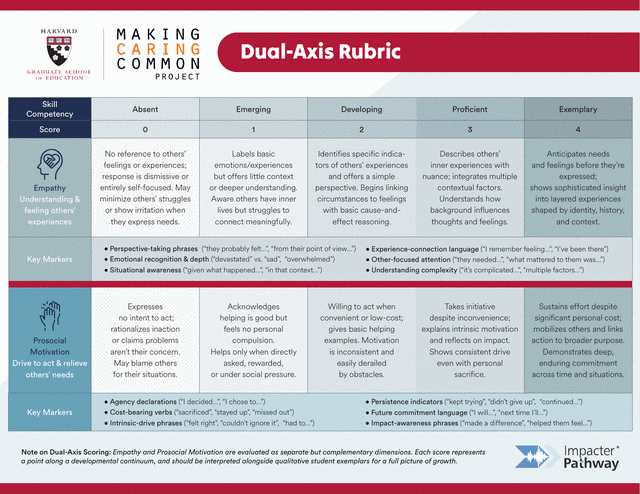
Three kinds of evidence, kept honestly separate: independent research we didn't write, our own technical documentation of how the scoring engine actually works today, and the applied field guides we build alongside district partners.
We Didn't Write These
Peer-reviewed and academic work that informs our approach — cited on their own merits, not as marketing copy.
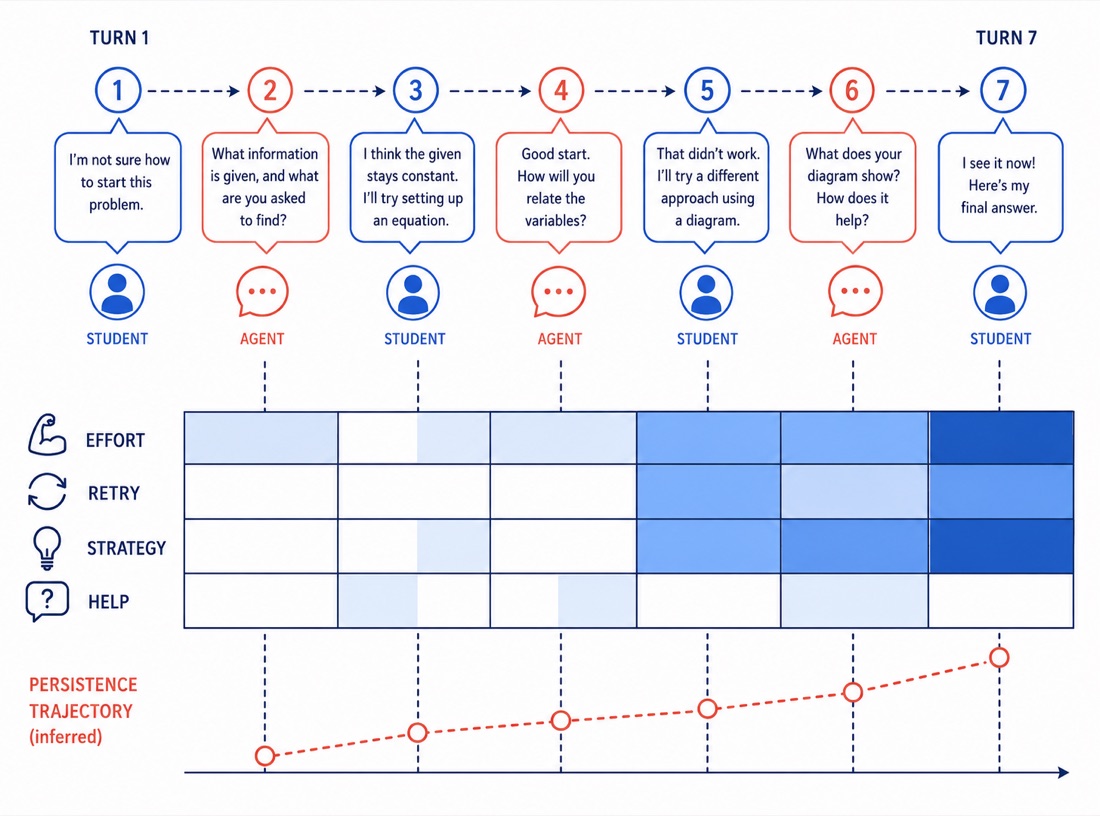
Using LLMs to Identify Indicators of Persistence from Students’ Dialogues with a Pedagogical Agent
Directly on point: a study of how well large language models can code psychological constructs like persistence and self-efficacy from real student dialogue. Its finding — that well-defined constructs code reliably while ambiguous ones don't — is a design input for our own scoring pipeline, cited directly in our v6.0 technical note below.
View PDF ↗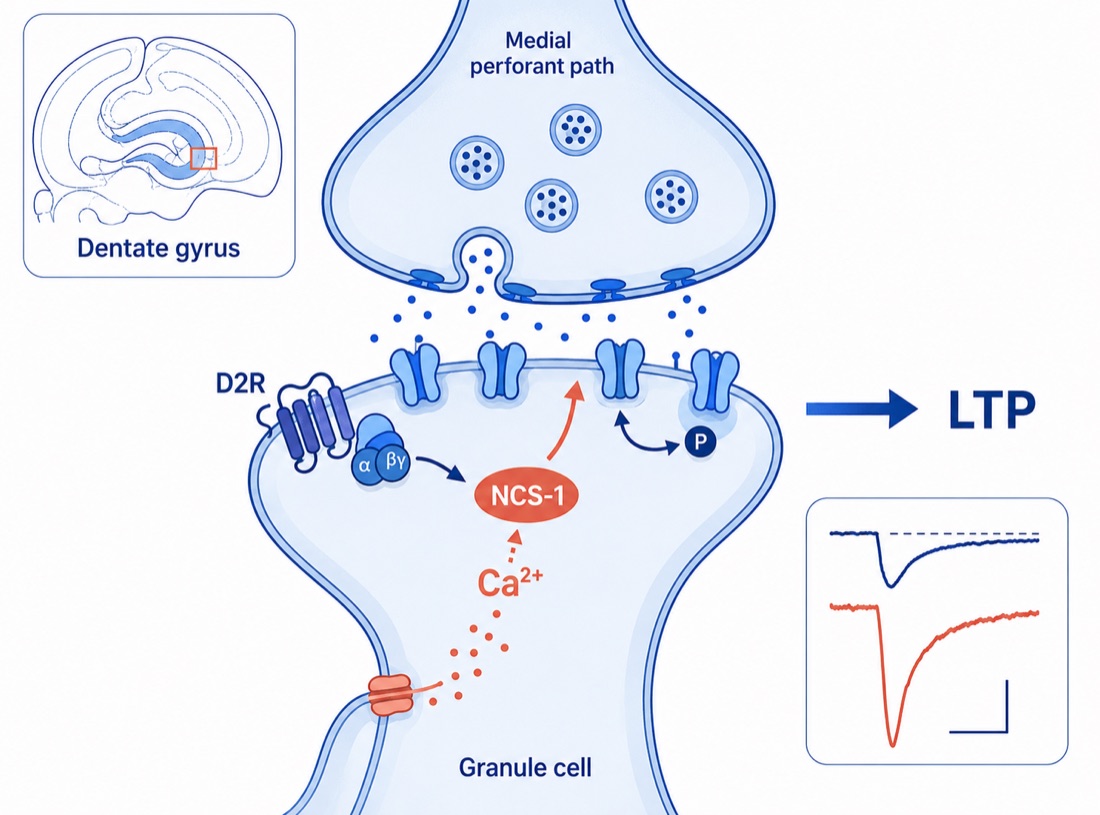
NCS-1 in the Dentate Gyrus Promotes Exploration, Synaptic Plasticity, and Rapid Acquisition of Spatial Memory
Foundational neuroscience on how exploratory behavior forms in the brain, from a genetically engineered mouse model. We include it as background on the biology of curiosity — not as evidence about our own product, which it doesn't test or mention.
View PDF ↗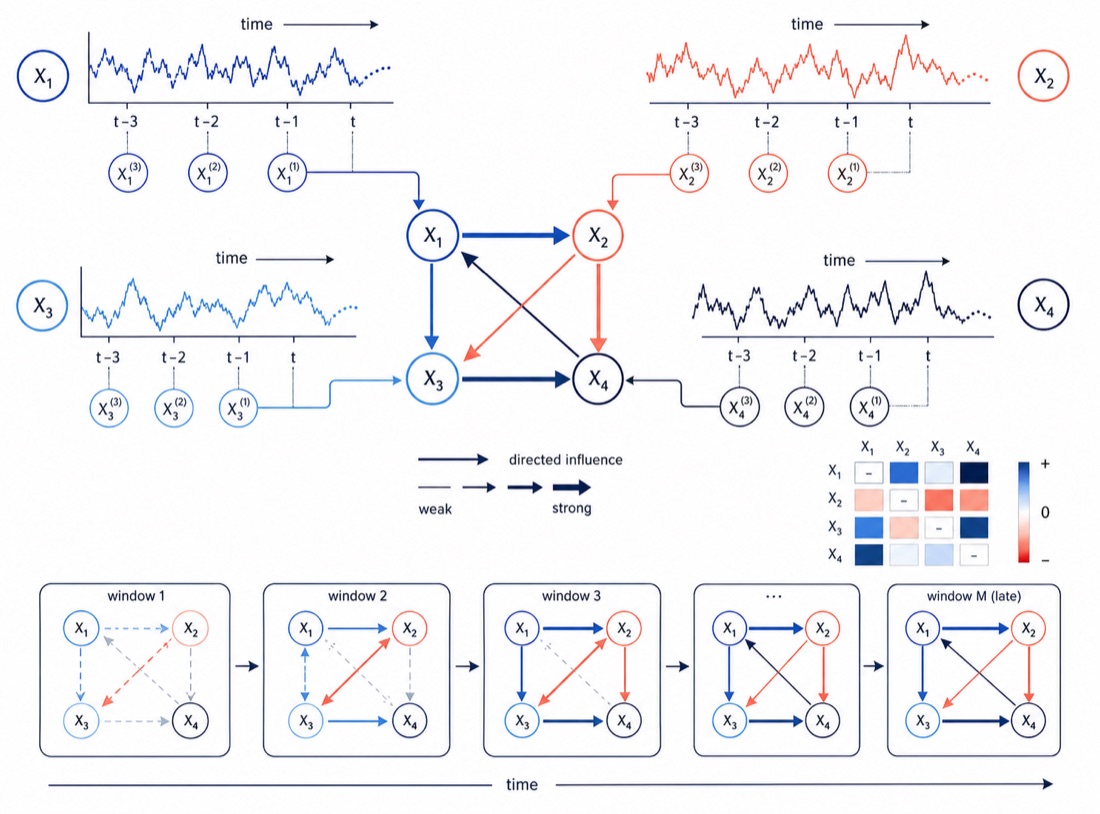
Temporal Causal Modeling with Graphical Granger Methods
The causal-discovery technique behind how we think about upstream drivers of growth (e.g., which shifts in mindset actually precede gains elsewhere) rather than just correlated outcomes.
View PDF ↗How Our Scoring Engine Has Evolved
We're publishing this progression on purpose. Early concept papers explored a broader, more experimental scoring model; the system running in production today is narrower, deterministic, and independently benchmarked. Read them as a record of how the thinking sharpened, not as three descriptions of the same system.
A Stratified, Human-in-the-Loop Sampling Layer for Continuous Calibration of a Production Rubric-Aligned Ordinal Scoring Pipeline
The technical note describing what's actually running today: a fine-tuned DeBERTa-v3-base encoder with a CORAL ordinal regression head, scoring against a combined Making Caring Common / CASEL-aligned rubric, with a weekly stratified human-review loop that feeds continuous recalibration.
View PDF ↗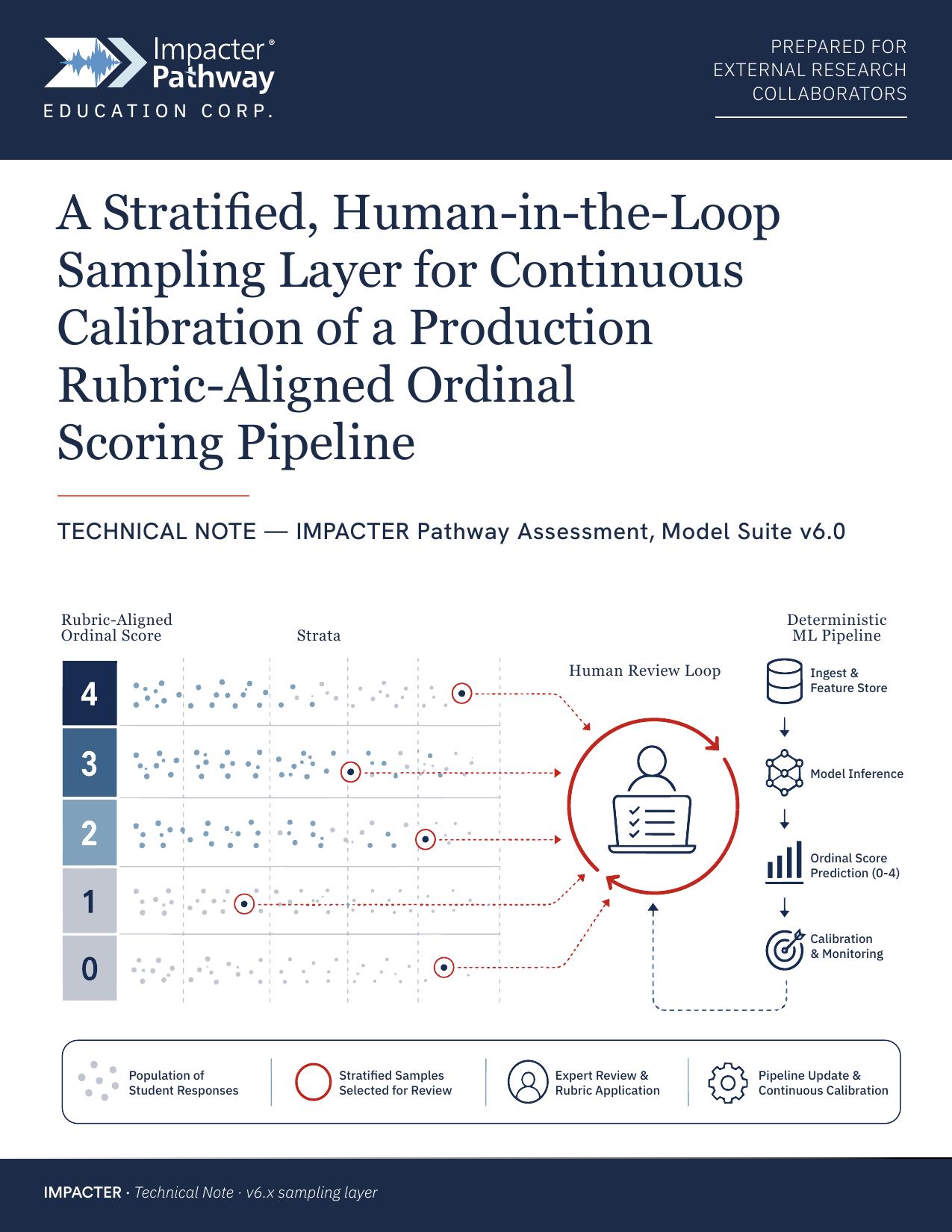

Emotional Intelligence Meets Machine Learning: IMPACTER's Blueprint for Elevating Student Voice
An early framing of the case for machine learning in reading student language for social-emotional signal — the vision that eventually became the rubric-first, deterministic architecture running today.
View PDF ↗
Multi-Dimensional Scoring Methodology: A Holistic Approach to Assessing Social-Emotional Growth
An earlier scoring model (DistilBERT-based, with peer-relative and engagement adjustments) exploring how much context should shape a score. The current system takes a narrower, more defensible path: one deterministic rubric-aligned score per response, no peer-relative adjustment.
View PDF ↗
The Impact Potential Score: An Elo-Inspired Growth Model
An exploration of chess-style relative rating systems as a growth metaphor. The current system uses a fixed 0–4 ordinal rubric scale instead — easier for a teacher or parent to read, and directly comparable to standard constructed-response scoring (AP, NAEP, ETS performance items).
View PDF ↗Field Guides, Co-Developed With Districts
Not peer-reviewed studies — practitioner-facing guides that translate the methodology above for the people who have to act on it.
A Human-Friendly Guide to IMPACTER's Machine Learning Model
Written for school and district leaders, not engineers: how the scoring system works, why it's trustworthy, and what makes it different from traditional assessment approaches, in plain language throughout.
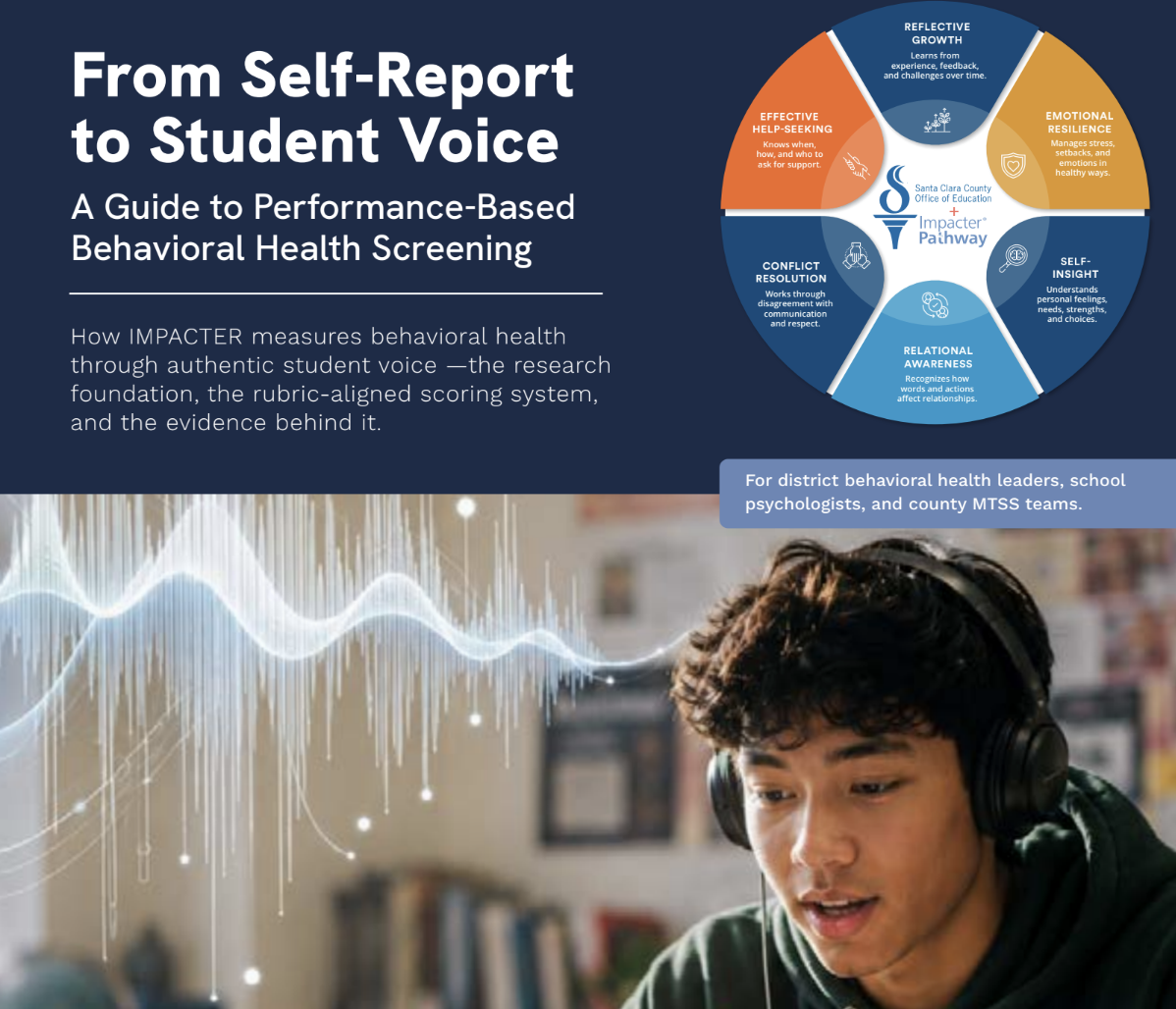
From Self-Report to Student Voice: A Guide to Performance-Based Behavioral Health Screening
Written for district behavioral health leaders, school psychologists, and county MTSS teams evaluating screener options. Walks through where Likert-scale self-report screeners (PHQ-9, GAD-7, BASC-3 BESS) fall short in K–12 settings, and how a performance-based, rubric-validated approach fits alongside them within a Multi-Tiered System of Support.